


What You Need to Know About Bringing Pets to Australia
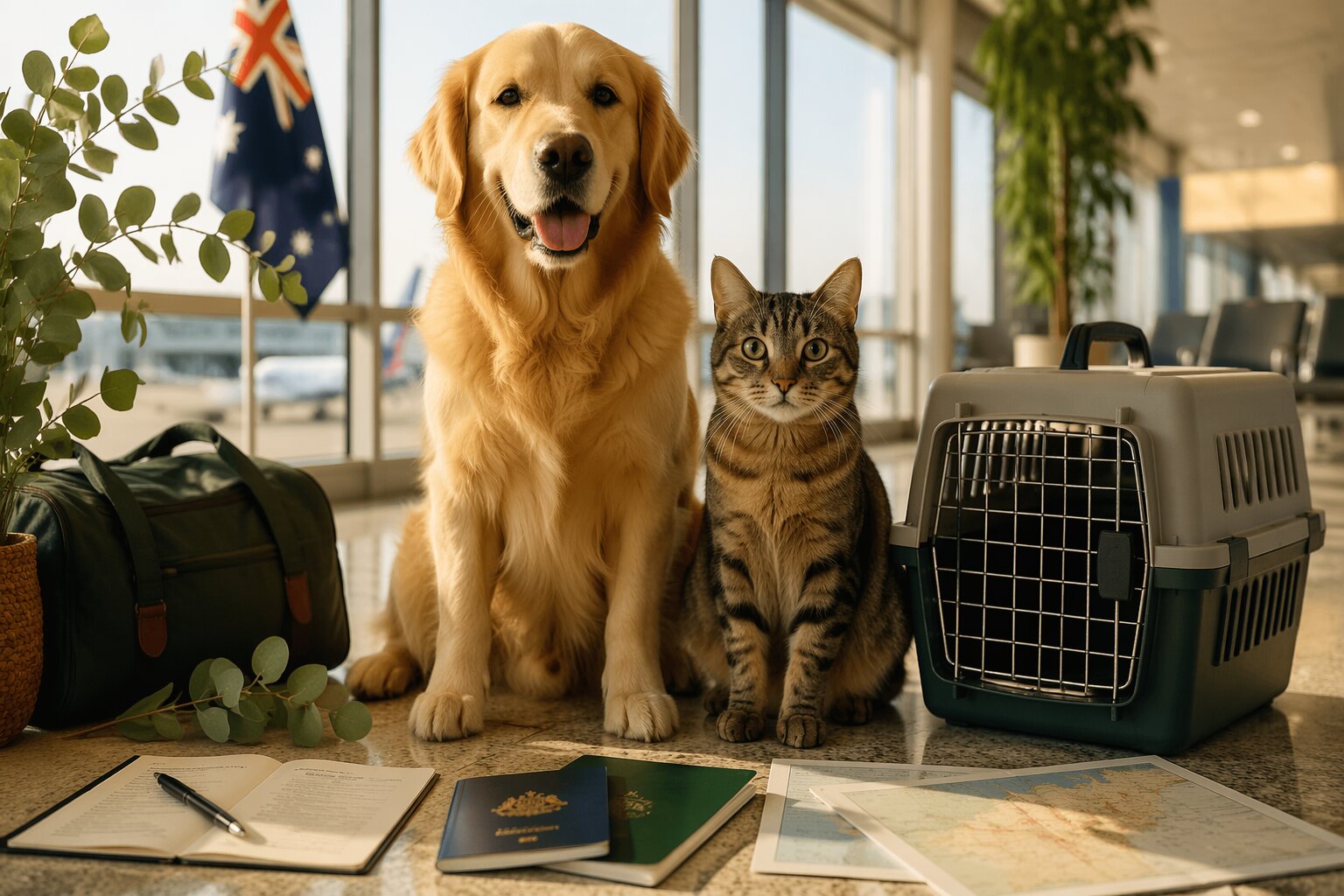
If you’re planning to bring your pet into Australia, you’ll face some of the world’s most rigorous import regulations. You can’t skip steps or rely on guesswork; even minor mistakes can lead to serious consequences for your animal companion. From breed restrictions and microchip requirements to quarantine protocols and changing airline policies, each detail matters. Before you pack your bags and book your flight, there’s much more you need to consider.
Import Regulations and Approved Country Categories
Australia implements comprehensive import regulations for pets, which vary depending on the country of origin. The Import Conditions System categorizes countries based on their rabies prevalence into three distinct groups: Group 1, Group 2, and Group 3.
For pets entering from Group 1 countries, such as New Zealand and the United Kingdom, there are no requirements for rabies vaccination or an antibody titer test. This group is considered to have a low risk of rabies, facilitating a more straightforward import process.
Conversely, Group 2 countries impose more stringent health requirements. Importing pets from these nations necessitates obtaining a health certificate that confirms the animal meets specific health standards set by Australian authorities.
Group 3 countries, which include nations like South Africa and Hong Kong, have the most rigorous import requirements. Pets from this category must be vaccinated against rabies, undergo blood sampling, and provide a laboratory report confirming satisfactory antibody levels. These measures are designed to mitigate the risk of rabies transmission.
Additionally, upon arrival in Australia, pets are required to stay in an approved facility, such as the Entry Quarantine facility in Melbourne, to ensure their health and safety during the import process.
Adhering to these regulations is essential for a smooth transition to Australia for both pet and owner.
Pet Eligibility and Restricted Breeds
Importing pets into Australia involves adhering to specific eligibility criteria regulated by Australian biosecurity laws. It is essential to verify that your cat or dog’s breed is allowed for importation; certain breeds, including the Pit Bull, Dogo Argentino, Perro de Presa Canario, Fila Brasileiro, as well as any hybrids of these breeds, are prohibited.
Additionally, dogs must be a minimum of eight weeks old at the time of transport and must have lived in approved states or countries for at least 180 days prior to import.
Before the pet’s departure, a veterinarian is required to complete a health certificate, which incurs an additional cost. In some cases, behavioral assessments and antibody titer tests may also be required to ensure the pet's suitability for import.
Compliance with every step of the process, including the mandatory quarantine period at the designated facility in Melbourne, is essential prior to completing the Entry Quarantine protocols.
Adhering to these requirements is critical to ensure a smooth importation process for pet owners.
Regulatory Updates and Legal Compliance
Recent regulatory changes necessitate thorough consideration when planning to import pets into Australia, particularly in light of the new EU legislation—EU2026/131 and EU2026/848—scheduled for implementation in 2026.
It is essential to ensure that any dog or cat complies with Australia's stringent import regulations, which require a precise health certificate that includes the correct microchip number and identity details.
Veterinary health requirements, such as rabies vaccination, blood sample collection, and an antibody titer test, must be completed prior to departure from the country of origin.
Additionally, it is important to note that only specific breeds of dogs are allowed entry; certain breeds, including Pit Bull and Presa Canario, are explicitly prohibited under Australian law.
For accurate and current information regarding entry requirements, pet owners are advised to utilize the Biosecurity Import Conditions System, consult the Department of Agriculture, or seek assistance from a migration agent Australia.
This ensures compliance with all necessary legal standards and helps mitigate potential issues related to the importation of pets into Australia.
Microchip Requirements and Identity Verification
Before a pet can enter Australia, it is essential that the animal possesses a microchip compliant with ISO standards.
Australia's import regulations are stringent, necessitating that the unique microchip number be registered prior to the animal's departure. Both dogs and cats are required to have an Identity Declaration, which must be verified by two accredited veterinarians. This process includes the submission of supporting photographs and adherence to biosecurity regulations.
Notably, microchips that contain only nine digits or that begin with the sequence 999 are not considered acceptable for entry.
Should the microchip be unreadable upon arrival at an International Airport or at the designated facility in Melbourne, entry will be denied. This requirement is a crucial component of the Entry Quarantine process, as well as for transport and any subsequent Post Entry procedures in Australia.
Compliance with these regulations is imperative for a smooth entry process.
Vaccination, Testing, and Treatment Protocols
A comprehensive vaccination, testing, and treatment protocol is essential for pets entering Australia. For cats and dogs originating from Group 3 countries, it is required that they be vaccinated against rabies at least 180 days prior to departure.
In addition to the rabies vaccination, dogs must also receive vaccinations for hepatitis, parvovirus, and bordetella bronchiseptica, all administered by an accredited veterinarian in the country of origin.
Compliance with biosecurity regulations necessitates mandatory parasite treatments and blood tests for Brucella Canis and Leishmania. These measures are crucial in preventing the introduction of diseases into Australia’s ecosystem.
Before transport, it is important to submit all vaccination certificates, test results, and a Pet’s Declaration to the appropriate authorities.
Upon arrival in Australia, pets will be directed to a designated facility, such as the Melbourne Entry Quarantine, where they will undergo further evaluation as part of the entry process.
Following these established protocols not only facilitates a smoother entry for pets but also aids in protecting public health and local wildlife.
Rabies Neutralizing Antibody Titer Test Procedures
Following a rabies vaccination, it is necessary to arrange for the Rabies Neutralizing Antibody Titer Test (RNATT) to assess the vaccine's efficacy. This test is obligatory for pets from Group 3 countries, and it must be carried out no less than 180 days prior to departure.
A veterinary professional must draw the blood sample, which should then be sent to an approved testing facility. The results must demonstrate that antibody titer levels comply with the stringent import regulations set by Australia.
It is essential to retain the laboratory report, as it is a prerequisite for Entry Quarantine in Melbourne upon your pet's arrival.
Furthermore, the RNATT results must be endorsed by an official government veterinarian in the exporting country before the health certificate for your pet can be issued.
This procedure ensures that all pets entering Australia meet health standards and helps mitigate the risk of rabies transmission within the country.
Documentation and Certification Process
The pet import process into Australia is heavily dependent on precise and timely documentation. Compliance with Australian biosecurity regulations necessitates the submission of specific documents at various stages.
Required documentation includes a Pet Declaration, a vaccination certificate, and the pet's microchip number. For cats and dogs originating from Group 3 countries, a rabies titer test must be performed at least 180 days prior to departure.
Additionally, a health certificate confirming that the pet is free from Brucella Canis and other specified diseases is mandatory and must be issued by an official government veterinarian.
Furthermore, an import permit, along with identity documents and treatment records, is necessary for entry at the facility of Melbourne International Airport. Adhering to these requirements is essential to ensure a smooth import process for pets.
Transport Arrangements and Practical Considerations
Choosing an appropriate mode of transportation is critical for ensuring a smooth transition for your pet to Australia. It is essential to select a carrier or a professional pet transport service that adheres to the International Air Transport Association (IATA) standards, as well as the regulatory requirements established by Australian authorities.
The financial implications of transporting a dog or cat to Australia can be significant, with costs typically ranging from €3,000 to €6,000 when arranging services from regions such as the United States or Great Britain. The final cost can vary based on several factors, including the size of the animal and the duration of the journey.
In addition to transportation arrangements, ensuring that your pet is accompanied by the necessary documentation is crucial. This includes all relevant health and vaccination certificates and microchip information—particularly proof of rabies vaccination and results from an antibody titer test.
Moreover, it is advisable to utilize an IATA-approved crate for the journey and to plan for your pet's dietary needs during transit. By attending to these details, you can help facilitate a successful relocation for your pet to Australia.
Quarantine Requirements and Arrival Process
Upon arriving in Australia with a pet, it is essential to adhere to established quarantine protocols that are in place to safeguard the nation’s unique ecosystem. Pets must be transported as manifest cargo and can only arrive at Melbourne International Airport.
Prior to departure, it is mandatory to secure a reservation at the Mickleham Post Entry Quarantine Facility; failure to do so will result in denial of boarding.
Pets entering from Group 2 or Group 3 countries are subject to obligatory quarantine periods that may last between 10 to 30 days. During this time, pets undergo regular veterinary examinations to ensure they meet import health and biosecurity regulations.
It is important to note that any personal items associated with the pets may be subject to destruction upon arrival, a precaution taken to maintain biosecurity standards.
These procedures are implemented to minimize the risk of introducing diseases or pests that could adversely affect local wildlife and agriculture.
Adherence to these guidelines is crucial for maintaining Australia’s environmental integrity.
Conclusion
Bringing your pet to Australia demands careful planning and strict attention to regulations. You'll need to secure the right permits, complete vaccinations, and have all documentation in order before travel. Be prepared for possible quarantine requirements and understand any breed or state-specific laws. Ensuring all steps are followed precisely helps you avoid setbacks and guarantees a smooth transition for your pet. Check for the latest updates to stay compliant and make your pet’s entry as trouble-free as possible.